What is the Best Way to Set Up a Home Theater?
Setting up a home theater is an exciting venture for any entertainment enthusiast. With the right setup, you can bring the cinematic experience right to your living room. But where do you start? Here, we’ll walk you through the essential steps to help you set up the perfect home theater.

Select the Ideal Room for Your Home Theater
Choosing the right room is crucial for setting up an effective home theater. Factors such as room size, shape, and the ability to control lighting will directly impact the viewing experience.
Considerations should extend beyond mere space and dimensions. The acoustics of the room play a vital role in audio quality. A room with too many reflective surfaces might cause excessive sound reverberations, affecting clarity. Alternatively, a carpeted room with soft furnishings can enhance sound absorption, resulting in clearer and more enjoyable audio here. Not just sound quality, but lighting conditions too need careful thought; controllable lighting would allow the best movie-watching conditions.
Strategically placing the home theater in a room with minimal ambient noise is also indispensable. Avoiding busy streets or selecting a basement theater, for instance, can make a significant difference in eliminating disruptions. This ensures that the focus remains solely on the movie’s content without extraneous noise.
Decide on the Screen Type and Size
Consider whether you want a television or a projector and screen setup. The room size and viewing distance play vital roles in determining the appropriate screen size.
For those opting for a traditional television, screen size should be harmonized with viewing distance for optimal picture quality. A simple guideline is to multiply the screen size by 1.5-2 to determine how far seating should be from the screen. For projectors, larger screen sizes create an immersive experience, but require larger rooms to accommodate the display properly.
Furthermore, consider the resolution of your screen or projector. 4K resolution is increasingly becoming a standard for home theaters, offering a crystal-clear visual experience. Increasingly, User Experience (UX) plays a role in determining how users interact with video technology making it pivotal in screen selection.
Set Up Your Surround Sound System
A surround sound system can transform your home theater into a cinematic experience. Placement of speakers and choosing the right audio equipment are essential for immersive sound.
The choice between a wired and a wireless surround system is often dictated by the layout and aesthetics of your room. Wireless systems offer convenience and a sleek look without tangled wires cluttering the room, whereas traditional wired setups may provide a slight edge in audio fidelity.
Speaker placement also plays a crucial role in achieving an optimal audio setup. The inclusion of a subwoofer enhances bass, providing a resonant depth to action films or music videos. Ensure even speaker spacing and alignment relative to seating arrangements for enveloping sound. If you’re installing the system yourself, leverage expert advice on identifying the sweet spots for speaker positions.
Optimize Seating Arrangement for Comfort
Ergonomic seating enhances the viewing experience. Consider the number of seats, arrangement, and style to ensure everyone has a comfortable view of the screen.
Reclining chairs, for example, offer superior comfort and can make all the difference during long movie marathons. Additionally, arranging seats in a staggered formation can prevent one viewer’s head from blocking another’s view, which is especially important with larger audiences.
Small considerations such as cup holders or small tables ensure convenience, while the addition of throw blankets or pillows can add a layer of coziness to your home theater environment.
Control the Lighting for Optimal Viewing
Lighting can greatly affect your home theater experience. Setting up dimmable lights or using blackout curtains will help maintain the ideal viewing ambiance.
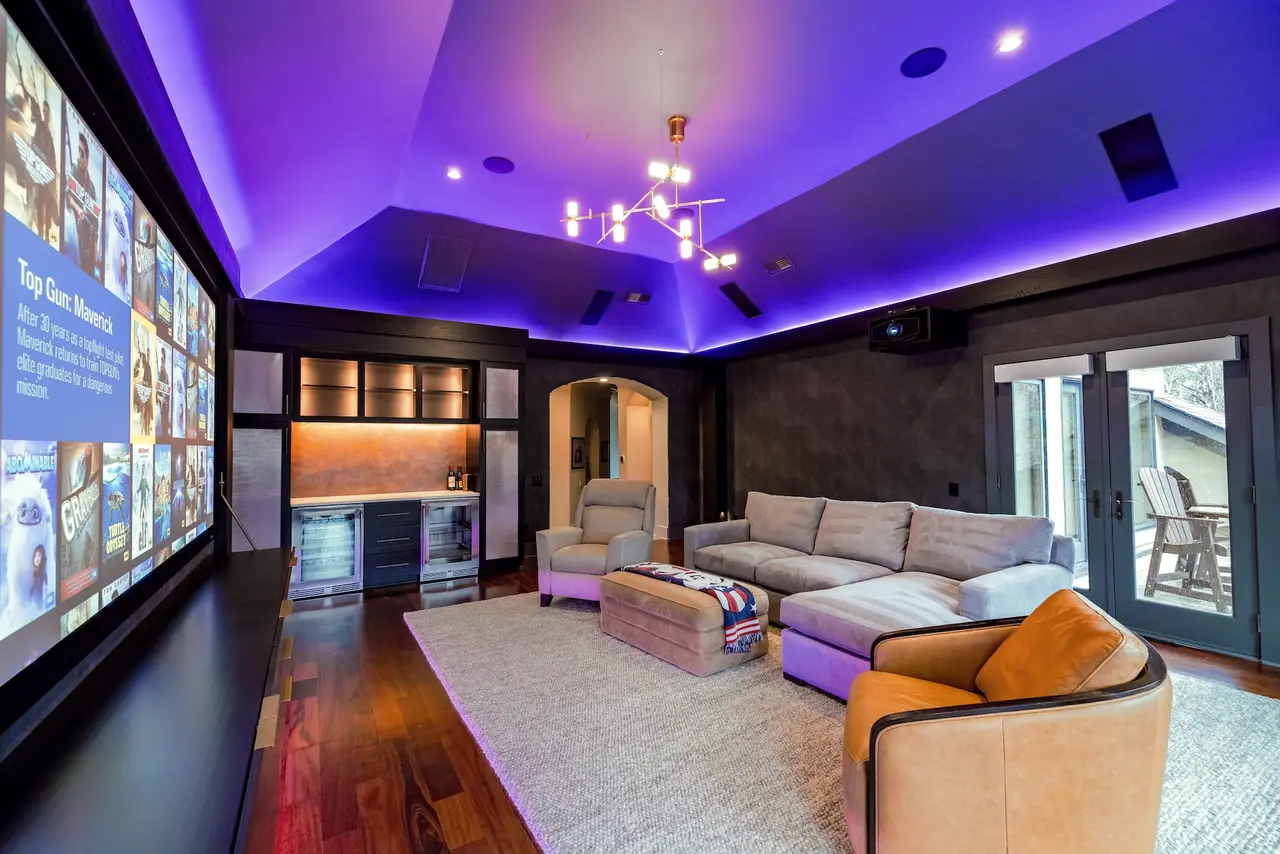
Lighting choices can veer towards the dramatic, such as small LED strips along the floor or ceiling. These provide subtle lighting without detracting from the screen, unlike conventional lighting options. Implementing smart lighting solutions can also bring flexibility and enhance the room’s vibe automatically with preset configurations.
One study suggests that environment cues, such as lighting, can affect decision making processes, making lighting a powerful ally in setting the movie-watching mood interiorly as audiences immerse in their theatrical journey.
Choose the Right Media Player and Accessories
Ensure compatibility and explore streaming options to enhance your movie nights. Don’t forget to consider additional accessories like remote control systems and soundproofing.
A media player with various streaming capabilities can extend the capabilities of your home theater setup beyond physical media. Options like 4K Blu-ray players, streaming boxes, or game consoles provide versatility and broader access to content. These reliable options ensure seamless integration with your existing setup, avoiding constant reconfigurations or compatibility issues.
Soundproofing accessories contribute considerably by maintaining audio fidelity and preventing outside noise disruption. Human-centric design dictates that sound design complements video, providing great care not just towards eliminating noise but also enhancing bass, treble, and pitch that enrich the overall experience.
Conclusion: Enjoy Your Perfect Home Theater Experience
Creating a home theater requires careful planning and consideration of various components, from choosing the right room and screen size to ensuring optimal audio and seating. Following these steps will help you design a space that offers a remarkable viewing experience for you and your guests.